
If you have ever tried putting an extra insole inside a pair of shoes, you probably know how much difference a little extra thickness can make. Shoes that felt comfortable in the morning might suddenly feel tight around the toes or loose around the heel.
The same principle applies to height increase insoles. Choosing the right footwear is just as important as choosing the insoles themselves.
Fortunately, you do not necessarily need to buy new shoes. Some of the footwear already in your closet may work well with height insoles. Knowing what to look for can help you achieve a comfortable, secure fit while keeping the added height discreet.
What Makes a Shoe Suitable for Height Increase Insoles?
Before considering specific styles, it helps to understand the features that make a shoe compatible with height insoles.
There are four main things to look for:
-
Interior depth: Enough vertical space to accommodate the additional lift.
-
Heel coverage: A sufficiently high shoe collar to keep your heel securely inside.
-
Adjustable closure: Laces or adjustable straps that allow you to customize the fit.
-
Removable footbed: An original insole that can be removed when additional space is needed.
A shoe does not necessarily need to have all four features, but having more of them generally makes fitting height insoles easier.
1. High-Top Sneakers
High-top sneakers are often one of the most practical choices for height increase insoles.
Their extended collar provides more coverage around the ankle and heel, which helps conceal the raised foot position. Most high-top designs also feature adjustable laces, allowing you to accommodate the additional thickness of an insert.
They are particularly suitable for casual outfits, weekend activities, and everyday outings.
However, not all high-tops have a spacious interior. Some slimmer designs can feel tight across the top of the foot. Always check the internal fit rather than relying on the height of the shoe collar alone.
Best for: Casual wear, discreet height enhancement, and shoes with moderate to deeper interiors.
2. Low-Top Sneakers
Low-top sneakers are a convenient option because many people already own several pairs.
Roomier designs with cushioned interiors and removable footbeds tend to work particularly well. You may be able to add a modest lift without significantly changing the appearance of the shoe.
The main consideration is heel coverage. Because low-top sneakers sit below the ankle, a taller insert can raise your heel too close to the opening.
If your heel starts slipping when you walk, try a lower-profile insole rather than simply tightening the laces.
For everyday low-top sneakers, subtle height enhancement is generally easier to accommodate than a larger lift.
Best for: Everyday outfits, commuting, shopping, and casual walking.
3. Casual Boots
Boots often provide more interior space and heel coverage than many other types of footwear.
Styles such as lace-up boots, chukka boots, and certain Chelsea boots may accommodate height insoles comfortably, depending on their construction.
Lace-up boots are particularly convenient because you can adjust the fit across the instep. Chelsea boots can also work, although their fixed opening makes them less adjustable.
Another advantage is that the higher shaft helps keep the raised heel position less visible.
During colder months, remember to account for thicker socks. A combination of thick socks and height insoles may take up more space than expected.
Best for: Fall and winter outfits, casual occasions, and shoes with deeper heel coverage.
4. Dress Shoes
Height increase insoles can work with dress shoes, but selecting the right combination requires a little more attention.
Traditional dress shoes often have narrower interiors and lower heel collars than sneakers or boots. They may also have fixed leather footbeds that cannot easily be removed.
Derby shoes generally offer more flexibility around the instep because of their open-lacing construction. Oxford shoes can be more restrictive, particularly if they already fit closely.
For formal footwear, a thin heel lift or low-profile insert may be more suitable than a thick, full-length height insole.
If you plan to wear height insoles to a wedding, business meeting, or formal dinner, test the combination several days beforehand. An important event is not the ideal time to discover that your shoes no longer fit comfortably.
Best for: Formal events, business attire, and subtle height enhancement.
5. Walking Shoes
Walking shoes often feature cushioned footbeds, adjustable laces, and relatively spacious interiors. These characteristics can make certain designs suitable for modest height insoles.
Look for walking shoes with a stable heel counter and enough room around the forefoot.
It is also worth considering how much walking you plan to do. A setup that feels comfortable during a short walk may feel different after several hours.
If you regularly walk long distances, prioritize a secure fit and moderate lift rather than maximum height.
Height increase insoles should not be confused with performance insoles designed specifically for running or other demanding sports.
Best for: Light daily walking, errands, and casual activities.
6. Loafers and Slip-On Shoes
Loafers and slip-ons can sometimes accommodate height insoles, although they tend to be less forgiving.
Unlike lace-up shoes, they offer limited adjustment. Adding extra thickness inside the shoe can change how securely the upper holds your foot.
A very thin heel lift may work in a roomy loafer, but taller inserts can cause the heel to slip out with each step.
If you have a pair of loafers that already feels slightly loose, a modest insert may be worth testing. If the shoes fit snugly from the beginning, choosing a different shoe style is usually more practical.
Best for: Small lifts in footwear with sufficient interior space.
Height Insole Compatibility by Shoe Type
The following table provides a general starting point for choosing suitable footwear.
| Shoe Type | General Compatibility | Suggested Lift Profile |
|---|---|---|
| High-top sneakers | Very good | Low to moderate |
| Roomy low-top sneakers | Good | Low to moderate |
| Lace-up boots | Very good | Low to moderate; higher only if fit allows |
| Chelsea boots | Good | Low to moderate |
| Walking shoes | Good | Low |
| Derby dress shoes | Moderate | Low |
| Oxford dress shoes | Limited | Very low |
| Loafers | Limited | Very low |
| Slip-on shoes | Limited | Very low |
| Sandals | Generally unsuitable | Not recommended |
These are general guidelines rather than fixed rules. The internal construction of an individual shoe matters more than its category.
How to Check Whether Your Shoes Have Enough Room
You can perform a simple fit test at home before wearing your height insoles outside.
Step 1: Inspect the original footbed
Check whether your existing shoe insoles are removable. If they are, removing them may create additional space, provided the replacement insert is designed to work without them.
Step 2: Position the height insole
Place the insert flat inside the shoe. Make sure it does not curl at the edges, shift sideways, or leave an unstable surface beneath your foot.
Step 3: Check your toe space
Put on your shoes and stand normally. Your toes should still have enough room to move without pressing against the front or top of the shoe.
Step 4: Check your heel position
Your heel should remain securely inside the shoe collar. If it sits unusually high or slips out when walking, the lift may be too tall for that particular shoe.
Step 5: Walk around indoors
Walk for several minutes, change direction, and sit and stand a few times. Notice whether the shoes feel stable and whether any uncomfortable pressure develops.
Do not assume that discomfort will disappear with continued wear. A different lift height or shoe may be a better solution.
Should You Buy Shoes in a Larger Size?
Not necessarily.
Buying shoes half a size or a full size larger may seem like an easy solution, but longer shoes do not always provide more vertical space.
You could end up with unnecessary room in front of your toes while still experiencing pressure across the top of your foot.
Instead of automatically sizing up, look for shoes with:
-
A deeper interior
-
A roomier toe box
-
Adjustable laces
-
A removable footbed
-
Secure heel coverage
A shoe with the right internal shape is generally more useful than one that is simply longer.
Choosing Height Insoles for Multiple Pairs of Shoes
If you want to move one pair of height insoles between different shoes, consider choosing a design with a manageable lift and a customizable fit.
A cushioned, trim-to-fit insert can be useful when your footwear has slightly different internal dimensions. However, trimming an insert to fit one shoe does not guarantee that it will fit every other pair.
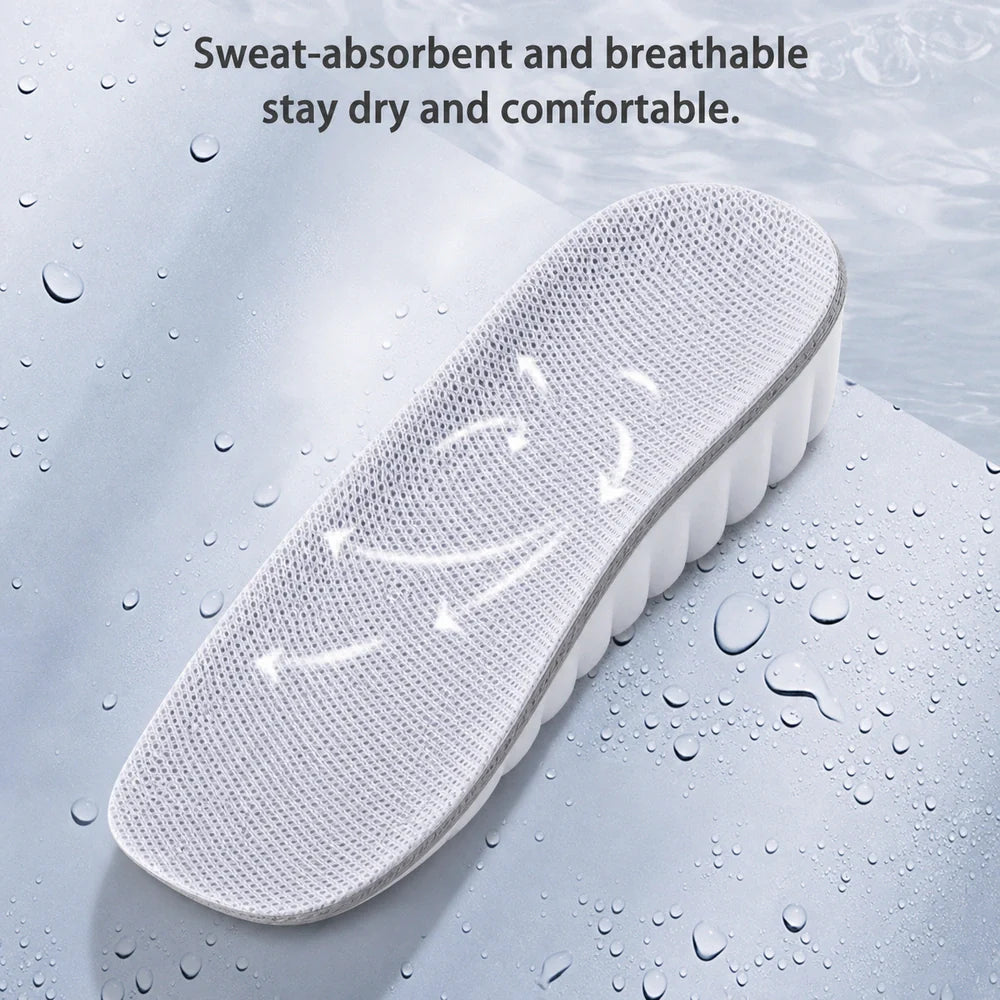
For a practical starting point, SHOEZEA's Invisible Height Increase Insoles feature a cushioned construction, breathable surface material, and multiple lift options. The trim-to-fit design allows you to adjust the insert according to your footwear.
When switching between shoes, repeat the basic fit test rather than assuming that the same lift will feel equally comfortable in every pair.
When a Shoe Is Not a Good Match
Even if you like the appearance of a particular pair of shoes, it may not be suitable for additional height.
Signs of poor compatibility include:
-
Your heel repeatedly slips out.
-
Your toes feel compressed.
-
The shoe upper presses against your foot.
-
The insole moves around inside the shoe.
-
Your balance feels noticeably different.
-
You experience pain or numbness while walking.
If you notice any of these issues, remove the insoles and reconsider the combination. For persistent discomfort or existing foot conditions, seek advice from a qualified healthcare professional.
Final Thoughts
You do not need an entirely new shoe collection to start wearing height increase insoles. A pair of roomy sneakers or casual boots you already own may be a suitable starting point.
High-top sneakers and lace-up boots generally provide more flexibility, while low-top sneakers can work well with modest lifts. Dress shoes and loafers require more attention to interior space and heel coverage.
Ultimately, the best shoes for height increase insoles are those that allow your feet to remain comfortable, secure, and stable. A good fit should complement your everyday footwear rather than force you to change the way you walk.
Frequently Asked Questions
Can you put height increase insoles in regular sneakers?
Yes. Many regular sneakers can accommodate height insoles, particularly those with removable footbeds and spacious interiors. Lower-profile lifts are generally easier to fit into low-top sneakers.
Are high-top sneakers better for height insoles?
High-top sneakers often provide better heel coverage, which can make height insoles easier to conceal. However, the shoe must still have enough internal space.
Can I wear height increase insoles with dress shoes?
Yes, provided the dress shoes have sufficient room. Thin or low-profile inserts are generally more suitable for formal footwear.
Do height insoles work well in boots?
Many boots are suitable because they offer deeper interiors and higher heel coverage. Lace-up boots also allow for additional fit adjustments.
Should I remove my original insoles before adding height insoles?
It depends on the design of both the shoe and the insert. Removing a removable footbed may help create space, but the replacement must provide a secure and comfortable surface.
Can I wear height insoles in running shoes?
They may physically fit inside some running shoes, but ordinary height increase insoles are not necessarily designed for running. Use footwear and inserts appropriate for your activity.
Do I need special shoes for height increase insoles?
No. Many everyday shoes can accommodate them. Interior depth, heel coverage, and overall fit are more important than whether a shoe is specifically marketed for height enhancement.