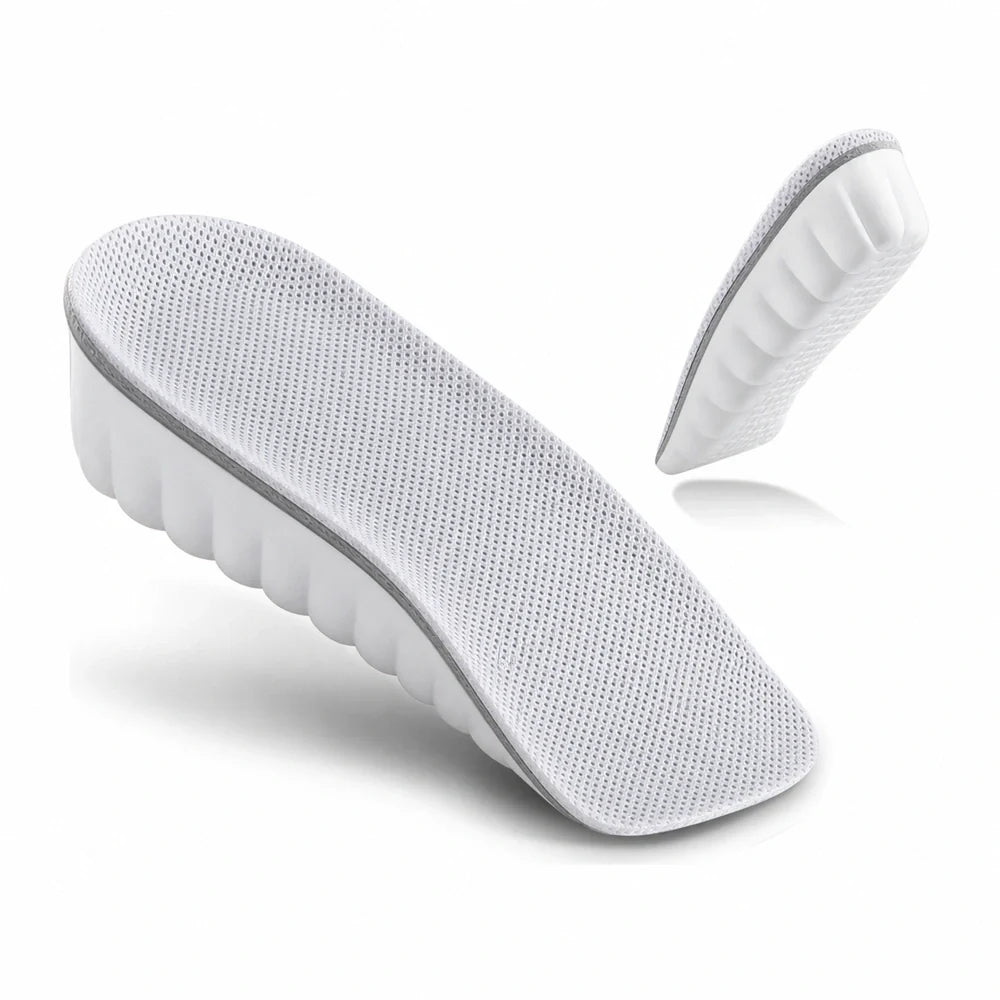

Height increase insoles can be comfortable for daily wear, but the answer depends on three things: the height of the insole, the shoes you wear them with, and how gradually your feet adjust.
Many first-time users focus only on how much height they can gain. That is understandable, but comfort matters just as much. A pair of insoles that adds height but makes your shoes feel tight will probably end up sitting in a drawer. A better approach is to choose a lift that works with your shoes and your daily routine.
This guide explains what makes height increase insoles comfortable, what can make them uncomfortable, and how to wear them in a practical way for everyday life.
What Makes Height Increase Insoles Comfortable?
Comfort usually comes down to fit, cushioning, stability, and shoe space.
A good height insole should support your heel without making your foot feel squeezed. It should feel secure when you walk and should not push your heel so high that your foot feels like it is coming out of the shoe.
The most comfortable setup usually includes:
- A moderate lift height
- Shoes with enough interior depth
- A stable heel area
- Soft but supportive cushioning
- Enough room around the toes
- A gradual break-in period
If any of these are missing, the insoles may feel less comfortable even if the material itself is soft.
Why Some Height Insoles Feel Uncomfortable
Height increase insoles take up extra space inside the shoe. If the shoe is already tight, adding any insole can make the fit worse.
Common comfort issues include:
- Toe pressure
- Heel slipping
- Tightness across the top of the foot
- A forward-leaning feeling
- Less room inside the shoe
- Tired feet after long wear
These problems often happen when the lift is too high for the shoe. For example, a taller insole may work well in a boot but feel awkward in a shallow sneaker or dress shoe.
This does not always mean height insoles are uncomfortable by nature. It often means the shoe and insole height are not a good match.
Are Lower Height Insoles Better for Daily Use?
For many people, yes. A lower or moderate lift is usually easier to wear every day because it changes the foot angle less.
If you are planning to wear height increase insoles to work, school, casual outings, shopping, or commuting, comfort should come before maximum height. A subtle lift may feel more natural and may be easier to use across multiple shoes.
A higher lift may be better for shorter occasions, photos, events, or shoes with deeper heel coverage. For daily wear, a practical height usually works better than the tallest option available.
Best Shoes for Comfortable Daily Wear
The shoe you choose can make a big difference. Some shoes naturally work better with height increase insoles because they have more room inside.
Good everyday shoe options include:
- Roomy sneakers
- High-top sneakers
- Casual boots
- Work boots
- Lace-up walking shoes
- Shoes with removable original insoles
More difficult options include:
- Very shallow loafers
- Tight dress shoes
- Low-cut slip-ons
- Narrow sneakers
- Shoes that already press on the top of your foot
If possible, remove the original shoe insole before adding a height insole. This can create more room and reduce pressure.
How Long Can You Wear Height Increase Insoles?
Some users can wear them for several hours comfortably, while others need more time to adjust. It depends on the lift height, shoe fit, and how sensitive your feet are to changes in foot position.
For beginners, it is better not to wear them for a full day immediately. Start with shorter periods and increase gradually.
A simple break-in schedule could look like this:
| Day | Suggested Wear Time | Purpose |
|---|---|---|
| Day 1 | 20–30 minutes at home | Test basic fit |
| Day 2 | 1–2 hours | Check walking comfort |
| Day 3–4 | Half day | Notice pressure points |
| Day 5+ | Longer wear if comfortable | Use for daily routine |
If you feel pain, numbness, or unusual pressure, stop wearing them and reassess the fit. Discomfort is a sign that something needs to be adjusted.
Tips to Make Height Insoles More Comfortable
A few small changes can make a big difference.
1. Start with a lower lift
If you are new to height insoles, do not start with the highest option right away. A lower lift is easier to adjust to and more likely to feel natural.
2. Choose shoes with enough space
If your shoes already feel tight without insoles, they are probably not the best choice. Height insoles work better in shoes that have extra depth.
3. Use lace-up shoes when possible
Laces allow you to adjust the fit. You can loosen the upper slightly to create more space while still keeping the shoe secure.
4. Check heel security
Your heel should stay inside the shoe when walking. If your heel slips out, the insole may be too tall or the shoe may be too low-cut.
5. Give your feet time to adjust
Even a comfortable height insole may feel different at first. Short test periods help your feet and walking pattern adapt gradually.
Can Height Insoles Help with Cushioning?
Some height increase insoles include cushioning that can make shoes feel softer under the heel. This can be helpful if your shoes have thin or firm insoles.
However, cushioning and support should be balanced. If the material is too soft, your heel may feel unstable. If it is too firm, it may feel harsh during long wear. The best daily insole should feel cushioned but steady.
For readers comparing a breathable daily option, SHOEZEA’s Invisible Height Increase Insoles for Men & Women can be viewed here:
https://shoezea.com/products/invisible-height-increase-insoles-for-men-women-breathable-cushioned-elevator-shoe-inserts
When Height Insoles May Not Be Right for Daily Wear
Height increase insoles are not ideal for every situation. You may want to avoid wearing them for long periods if:
- Your shoes become too tight
- Your heel slips while walking
- You feel pressure on your toes
- You have existing foot or ankle pain
- You need shoes for intense sports or running
- The insole makes your walking feel unstable
If you have a medical foot condition, back pain, ankle problems, or posture concerns, it is best to ask a qualified professional before using lift insoles regularly.
Daily Wear Checklist
Before wearing height increase insoles outside for the day, check these points:
- Do your toes still have enough room?
- Does your heel stay inside the shoe?
- Can you walk naturally?
- Does the shoe upper feel too tight?
- Do the insoles stay in place?
- Can you stand comfortably for several minutes?
If the answer is yes, the setup is more likely to work for daily use.
Final Thoughts
Height increase insoles can be comfortable for daily wear when the fit is right. The most important thing is to match the insole height with the correct shoes and give yourself time to adjust.
For everyday use, a moderate lift is often more practical than a very high one. It is easier to wear, easier to hide, and more likely to feel natural during normal walking.
The best height insole is not simply the tallest one. It is the one you can wear comfortably, confidently, and consistently in the shoes you already like.
FAQ
Are height increase insoles comfortable all day?
They can be, but it depends on the insole height, shoe space, and your comfort level. Beginners should start with shorter wear times before using them all day.
Do height insoles hurt your feet?
They should not hurt when properly fitted. Pain usually means the lift is too high, the shoe is too tight, or your feet need a different type of support.
Can I wear height insoles to work?
Yes, many people wear them in work shoes, especially if the shoes have enough room. A lower or moderate lift is usually better for long workdays.
What shoes are most comfortable with height insoles?
Roomy sneakers, high-top sneakers, casual boots, and lace-up walking shoes often work well because they have better depth and heel coverage.
Should I size up my shoes for height insoles?
Sometimes, but not always. If your shoes feel tight after adding insoles, you may need a roomier shoe, a lower lift, or to remove the original insole.